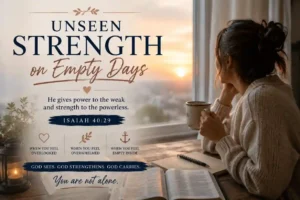
2 Corinthians 4:16–17
Paul writes this from prison. Not after he got out. From inside it.
That detail changes everything about what “do not lose heart” means.
“Therefore we do not lose heart. Though outwardly we are wasting away, yet inwardly we are being renewed day by day. For our light and momentary troubles are achieving for us an eternal glory that far outweighs them all.”
2 Corinthians 4:16–17 · NIV
The Outward Decay Is Real
Paul doesn’t spiritualize or minimize the wasting. “Outwardly we are wasting away.” The Greek diaphtheirō — being destroyed, worn down, decaying. He’s not talking about aging gracefully. He’s talking about being ground down by suffering: beaten, shipwrecked, imprisoned, left for dead. His list of hardships in this same letter reads like a man who has nothing left to prove about what pain looks like.
He acknowledges it. He doesn’t tell you to think positively or act as if the empty days aren’t costing you something. The body is wasting. The season is hard. The days feel hollow.
And then he says: and yet.
Day by Day
“Inwardly we are being renewed day by day.” The verb is present tense, passive voice. Being renewed — not once, not in a dramatic moment, not visible to the eye. Day by day. A quiet renewal that doesn’t announce itself.
This is the unseen strength. It’s not the strength you feel on the hard days. It’s the strength that explains why you’re still standing when you should have collapsed months ago. It’s the renewal that kept you in the word when you didn’t want to read it. The quiet sense of God’s nearness that arrived when you stopped trying to manufacture it. The morning you woke up and something had shifted, and you didn’t know when or how it happened.
God does His deepest work out of sight. The cross looked like defeat until Sunday morning. The renewal on your empty days is just as real, just as active, just as certain.
The Weight of the Word
Then Paul does something unexpected. He calls his sufferings “light and momentary.” This is the man beaten with rods three times. Shipwrecked three times. Stoned and left for dead. He calls it light.
Not because it isn’t hard — but because he’s put it on a scale against eternal glory and found it feather-light by comparison. The Greek word for “weight” in “eternal weight of glory” is baros — the same root as barometric pressure. The glory is that heavy. Your suffering is real. But it is not the heaviest thing on the scale. Paul has done the math, and the comparison isn’t close.
The Pattern of the Cross
Paul’s confidence rests on the resurrection. The same God who renewed Christ from the dead is renewing you on your empty days. The crucifixion looked like the worst day in history until Sunday morning changed the weight of it entirely.
This is the pattern: strength showing up after the apparent defeat. Renewal happening out of sight. A glory coming that makes the suffering look different — not because the suffering wasn’t real, but because the glory is so much heavier. The empty days are not wasted. They are the very ground in which something eternal is being built.
Sit With It
- Where are you looking for obvious, dramatic evidence that God is working — and missing the quiet, daily renewal?
- What is the “light and momentary” Paul is asking you to put on the scale? Does it feel light to you right now?
- What would “do not lose heart” look like practically, specifically, on your emptiest days?
Prayer
Lord, my days have felt empty. The wasting has been real. But You are renewing me in places I cannot see. Forgive me for measuring Your work only by what’s visible. Open my eyes to the quiet renewal You’re doing in me day by day. Let the weight of eternal glory change how I hold this season. I will not lose heart. Amen.