Holiness & The Fear of God · Isaiah 6:1–5
The same fire that reveals our sin
is the fire that makes us clean.
There is a moment in the throne room of heaven that should stop every reader cold — and then, if we stay long enough, fill us with the deepest wonder we have ever known.
“Holy, holy, holy is the Lord of hosts; the whole earth is full of His glory!”
Isaiah 6:3 · NKJV
Around the throne — living creatures, twenty-four elders, fire and glass and rainbow. And above it all, four living creatures who never rest, never stop, and never move to a different subject. Day and night, without ceasing, they declare the same thing. Not because they are required to. But because having seen Him, they cannot conceive of anything more worth saying.
The weight of three words
In Hebrew literature, repetition is emphasis. To say something twice is to stress it strongly. But to say something three times — the superlative of superlatives — is to declare it beyond all comparison. The seraphim are not stuck in a liturgical loop. They are making the strongest declaration available to creaturely speech: holiness is not a quality God possesses alongside others — it is the defining atmosphere of His entire being.
God is not mostly holy. He is holy in His love. Holy in His wrath. Holy in His mercy. Holy in His power. Holiness is not a department of His character — it is the colour that saturates every attribute He has.
What Isaiah saw — and what it cost him
When Isaiah encountered this God, the first thing he said was not a theological formula. It was a cry of devastation — and then, remarkably, a cry of relief.
“Woe is me, for I am undone! Because I am a man of unclean lips, and I dwell in the midst of a people of unclean lips; for my eyes have seen the King, the Lord of hosts.”
Isaiah 6:5 · NKJV
Isaiah was not a bad man by any human measure. He was a prophet, called and devoted. But the moment true holiness entered his field of vision, every pretence of personal goodness evaporated instantly. He did not need anyone to explain sin to him. The contrast was immediate, total, and undeniable. This is what the holiness of God does — it does not first teach us doctrine about sin. It shows us sin by the light of its own purity.
The consuming fire is not our enemy
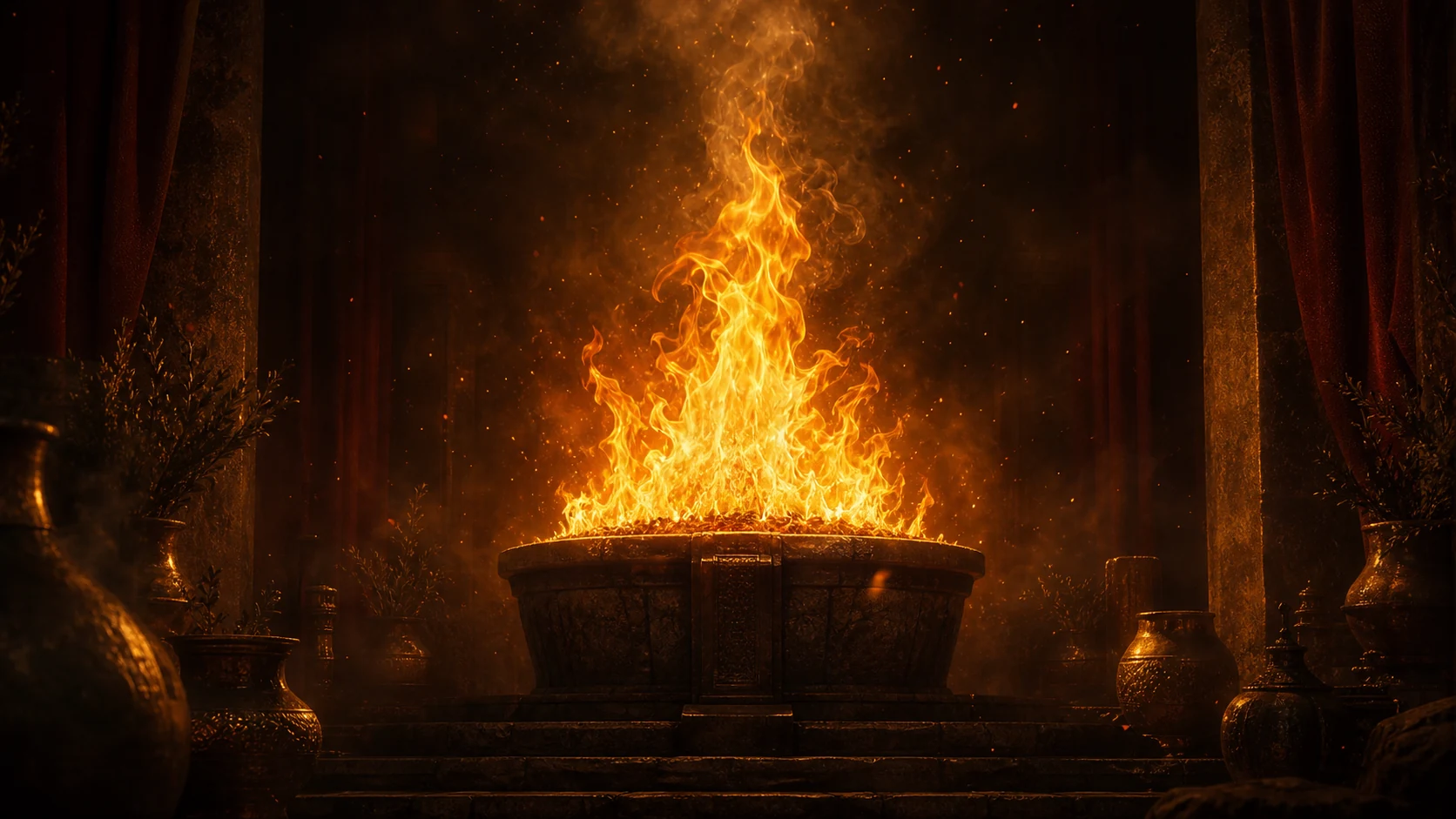
But the story does not end at verse 5. The seraph takes a live coal from the altar — the very fire of God’s holiness — and touches it to Isaiah’s lips. And the word spoken is not “you are condemned.” It is grace:
“Behold, this has touched your lips; your iniquity is taken away, and your sin purged.”
Isaiah 6:7 · NKJV
The same fire that revealed Isaiah’s sin became the instrument of his cleansing. The holiness that exposed him was also the holiness that restored him. God does not lower His standard to make peace with us. He satisfies His standard in Christ — so that we can stand in the presence of the flame without being consumed. Our God is a consuming fire, and for those who are in Christ, that fire has already done its cleansing work at the cross.
Life application: living before a holy God
Knowing that God is holy is not meant to paralyse us — it is meant to orient us. Here is what that looks like in the everyday:
Four ways holiness shapes daily life
- Begin your morning by acknowledging who you are approaching. A simple, honest prayer — “You are holy; I am not” — resets the posture of the whole day before a single email is opened.
- When you sin, resist the urge to minimise it. The same honesty Isaiah showed — “I am undone” — is what opens the door to the same cleansing he received. Confession is not self-punishment; it is the path back to the fire that heals.
- Let the holiness of God shape your worship. The next time you sing or pray, remember you are not reciting words — you are joining the creatures around the throne in the most ancient and unceasing declaration in existence.
- Carry the coal. Isaiah left that throne room sent and equipped. The encounter with holiness was not the end — it was the beginning. Holiness transforms us and then sends us out to represent the God we have seen.
The fire that makes us clean
We live in a moment when the church is tempted to domesticate God — to shape Him into a companion who overlooks what we prefer He not notice. But the God of Scripture is the one before whom seraphim cover their faces. He is the consuming fire.
And the extraordinary good news is this: He is also the God who sends the coal. Who bears the wrath. Who makes the unclean clean. Knowing He is holy does not push us away from Him. It makes His grace, at last, make sense — and transforms it from a pleasant idea into the most staggering reality in the universe.
“For our God is a consuming fire.”
Hebrews 12:29 · NKJV
A prayer
Holy Father, we confess that we have grown comfortable where we should be undone. Forgive us for shrinking You to the size of our preferences. Open our eyes to even a glimpse of Your consuming holiness — and then show us again the blood of Your Son, which is the only reason we can draw near. Make us people who tremble before You, and who find in that trembling the deepest joy we have ever known. In the name of Jesus Christ, the Holy One of God. Amen.